Pages

Showing posts with label Science. Show all posts

Monday, May 17, 2021

Dilution and Filtration

Last week for hurumanu 4 which is science. We were diluting copper nitrate and sodium hydroxide.

Equipment- Test tube rack, 4 test tubes, pipette, the chemical solutions Copper Nitrate and Sodium Hydroxide

Method- Take 4 test tubes, in the first test-tube measure and pour in 10ml of Copper Nitrate. Then take 1ml from the first test tube and pipette into the second test tube. Add 9ml of water to make it up to 10ml. Then repeat for the third and fourth test tubes. 

Making the precipitate- Now add 5ml of Sodium Hydroxide to each test tube and take a picture in front of white paper.


Then we had some questions to answer.

    1. Which test tube had the most concentrated sample of Copper nitrate? The first test tube was the most concentrated out of all of them.

      2. When we added water what were we doing to the concentration of the solution? When you add water you are diluting the copper nitrate.

      3. Which concentration of copper nitrate formed the most precipitate, why do you think this is the case? The first one was the most concentrated because it wasn't mixed with any water and it was also the most blue.

        4. Make sure you have a photo to post!
        Some photos of what we did last week
          

        Tuesday, March 30, 2021

        Science Water

        For the last two weeks, we have been looking at the body and all the food groups that we need to generate our body so that it is the healthiest it can be for us. Those groups include fiber, carbohydrates, proteins, lipids, vitamins/minerals, and water 

        Some examples of fiber are: 

        • "Wholegrain breakfast cereals, wholewheat pasta, wholegrain bread and oats, barley and rye.
        • Fruit such as berries, pears, melon, and oranges.
        • Vegetables such as broccoli, carrots, and sweetcorn.
        • Peas, beans, and pulses.
        • Nuts and seeds.
        • Potatoes with skin."

        Some examples of carbohydrate are:

        • Glucose.
        • Galactose.
        • Maltose.
        • Fructose.
        • Sucrose.
        • Lactose.
        • Starch.
        • Cellulose.

        Some examples of  proteins are:

        • Meat, 
        • cheese, 
        • eggs, 
        • bread 
        • Humes 
        • nuts and seeds

        Some examples of lipids are:

        "Fats, oils, waxes, certain vitamins (such as A, D, E, and K), hormones, and most of the cell membrane that is not made up of protein. Lipids are not soluble in water as they are non-polar, but are thus soluble in non-polar solvents such as chloroform."

        Some examples of vitamins/minerals are:

        "Calcium, chromium, copper, iodine, iron, magnesium, manganese, phosphorus, potassium, sulfur, sodium, and zinc. Minerals and trace elements are mainly found in meat, cereals, fish, milk and dairy foods, vegetables, dried fruit, and nuts."

        But today I did the water side of it with me and my buddy Lhysette. We made a poster on canva of some reasons why it is important to have water all the time in our lives.

        Monday, February 22, 2021

        Chicken leg Dissection

        Last week on Wednesday for Hurumanu 4 which is science we were dissection chicken legs and there was a list of instructions to follow.

        Aim: In this dissection, you will locate and describe the various tissues and the structures of the drumstick and thigh of a chicken.

        Materials: A chicken drumstick with thigh, dissecting probe, scalpel, dissecting scissors, paper towels, forces, dissecting tray, gloves, disinfecting hand wash, and spray. 

        Safety:

        1. wear gloves.
        2. do not put anything in your mouth (fingers, pens, etc.) during the dissection.
        3. wash your hands thoroughly at the end of the dissection with antibacterial soap and hot water. Ensure your hands are dried after washing.
        4. spray the surfaces with antibacterial soap. 
        Procedure:
        1. place the chicken leg on a dissecting tray and examine (look at ) the exterior features. The tough outer layer is called the epidermis (or skin). The small bumps covering the skin are where the feathers were attached. 
        2. Examine the lower leg. this is called the drumstick and it is the equivalent (same as) of your lower leg the large muscle at the back of the leg is the same as your gastrocnemius. It also includes two bones-the tibias ( the larger one) and fibula (the thinner, smaller one).
        3. Examine the upper leg. on both a chicken and a human this part si called the thigh. t contains a large bone called the femur.
        4. Carefully pull the skin off by sliding it down and off the lower leg. you may need to use your scalpel to remove it but be careful not to cut any muscle tissue.
        5. The yellowish material under the skin is fat (adipose).


        Tuesday, December 1, 2020

        Dry Ice

        This week for science we got to play with dry ice. Dry ice is ice that is -78 degrees. We put the dry ice in hot water and then it sublimation a lot off-gas came out then we put it in warm water with dishwashing liquid and bubbles with smoke inside of them. We also had this Christmas tree thing that had all these conical flasks with water and food die inside and we put dry ice in everyone and smoke was flowing out.

        This is what it looks like but with smoke coming out o fit 
        Christmas Tree Science Worksheet | Printable Worksheets and Activities for  Teachers, Parents, Tutors and Homeschool FamiliesThe Mist And Mystique Of Dry Ice : The Protojournalist : NPR

        Monday, October 19, 2020

        Mars Perseverance Mission

        Today for hurumanu 3 which is science we have to answer questions about mars perseverance mission.

        The first question I have to answer is what's rocket did the perseverance use to get into space. The rocket that they perseverance is an Atlas V-541.
         
        The second question is described two vehicles that are being taken to Mars.
        They took a Transit Habitat and a Lander.

        The thread question is where does the mission plan to land on Mars and what are they looking for. They will lane in Jezero on mars.

        And the last question is how will the vehicle lane without being damaged.
        The answer to the last question is a parachute. There is a parachute connected to the vehicle and then rockets on the side of the vehicle and it helps it to slow down and makes it safer to land.

        Tuesday, September 22, 2020

        Science

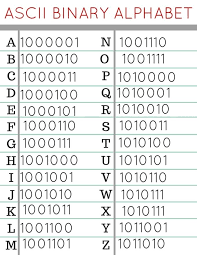
         For the last 2 days, we have been looking at different ways to comminate using binary code, flag signals and morse code for science. Me and my group used binary code. Binary code is using the number 1 and 0 to comminate with with other people. So for example you would put up the number 1 and then your partner would write number one and then you put up 0 4 times and then your partner will write 0 4 times and you put up the number one and your partner will write the number 1 down and then you have the letter A.


        Thursday, August 8, 2019

        water cycle

        AIM: TO LOOK AT THE WATER CYCLE AND HOW CLIMATE CHANGE IS AFFECTING IT.

        Definition:

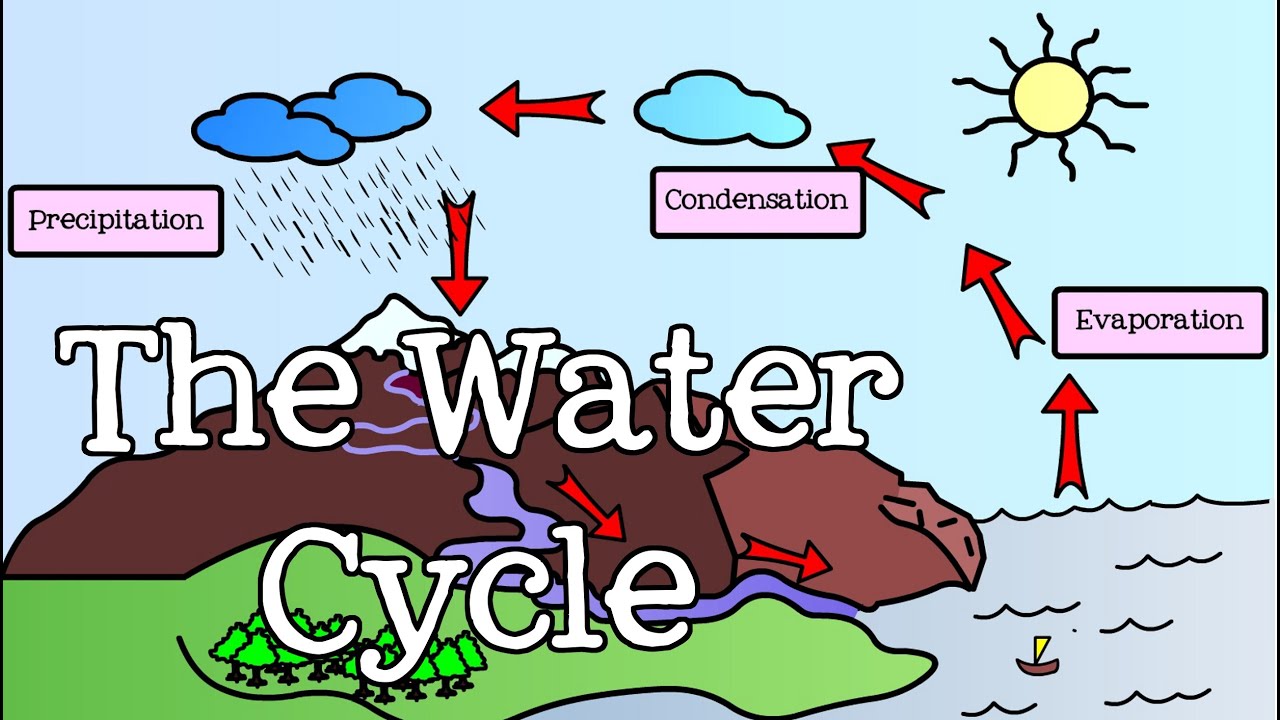
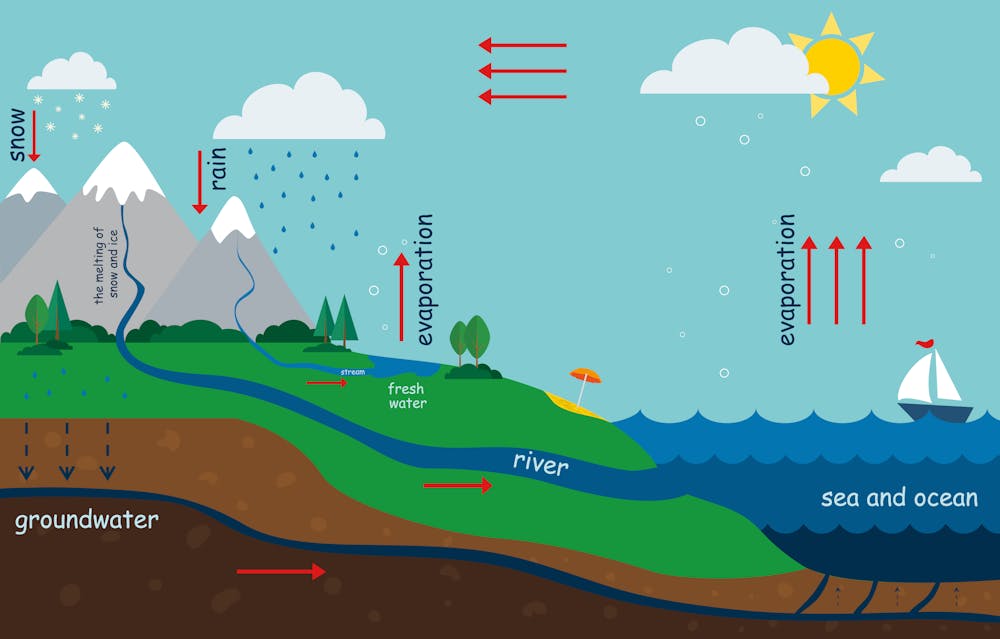
        The water cycle is continuous water going from the sea to sky to the land and back to the sea


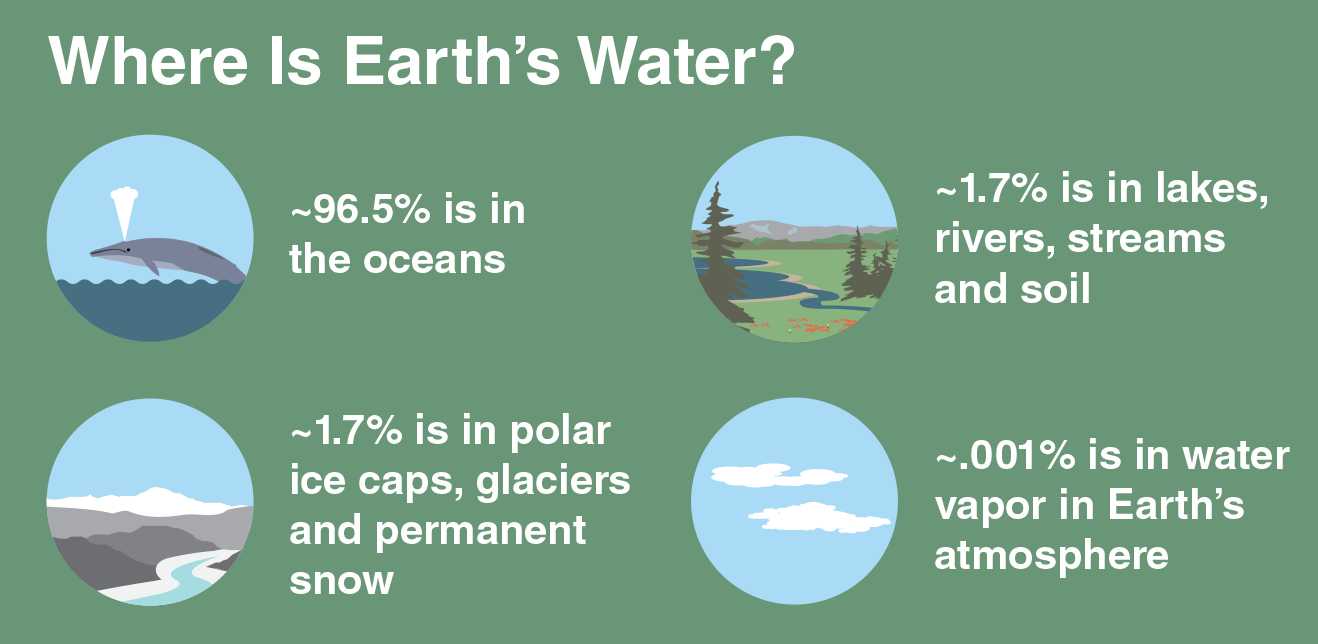
        A green box with icons and white text. Text reads: Where is Earth's Water? 96.5 percent is in the oceans; 1.7 percent is in lakes, rivers, streams, and soil; 1.7 percent is in polar ice caps, glaciers, and permanent snow; 0.001 percent is in water vapor in Earth's atmosphere
        Scientific words:


        Evaporation. When water is heated by radiant energy it turns into water vapour.
        • Transpiration. Evaporation from plants.
        • Condensation. When water vapour cools, molecules join together and form clouds.
        • Precipitation. When clouds get heavy the waters falls as rain, sleet, hail, or snow.
        • Acidification: the action or process of making or becoming acidic.

        We will be conducting an experiment that looks at the different ways that climate change is affecting the water cycle.

        THE WATER CYCLE EXPERIMENT

        Bag 1: Normal Water cycle
        Bag 2: Water cycle with CO2 added: like Oceans in climate change
        Bag 3: Water cycle with ice added: like Antarctica in climate change

        Material:

        1. Ziploc bag  
        2. Vivid market 
        3. 1 cup of water 
        4. 2 drop of food colouring  

        Steps:

        1. get into a group of 3
        2. get materials 
        3.  the water cycle on Ziploc bag
        4.  get 2 drops of blue food colouring
        5.  add 1 cup of water
        6. tape the Ziploc bag on a window with lots of sun sring on it

        Two Images:

        Image result for water cycle for kids


        Image result for water cycle for kids


        The Water Cycle: Bag 1
        CO2 Water Cycle: Bag 2
        Acid
        Desert Water Cycle
        Bag 3
        Does it cycle?
        YesYesYes
        Amount of Water
        222
        Acidity
        121
        Key: Water and acidity amount: 1 = none 
        2 = small drips
        3 = large drips


        Other comments:

        Bag 1 :
        1: the water cycle in bag 1 had no acidity
        2: the water  cycle  does cycle
        3: the water cycle in bag 1 has little drops of water  
        Bag 2 : 
        1: the water cycle in  bag 2 has acidity
        2: the water  cycle in bag 2   does cycle
        3: the water cycle in bag 2 has little drops of water
        Bag 3 :
        1: the water cycle in  bag 3 has  no acidity
        2: the water  cycle in bag 3   does cycle
        3: the water cycle in bag 3 has little drops of water

        in all three bags, there are little drops of water and the water cycle is going. 


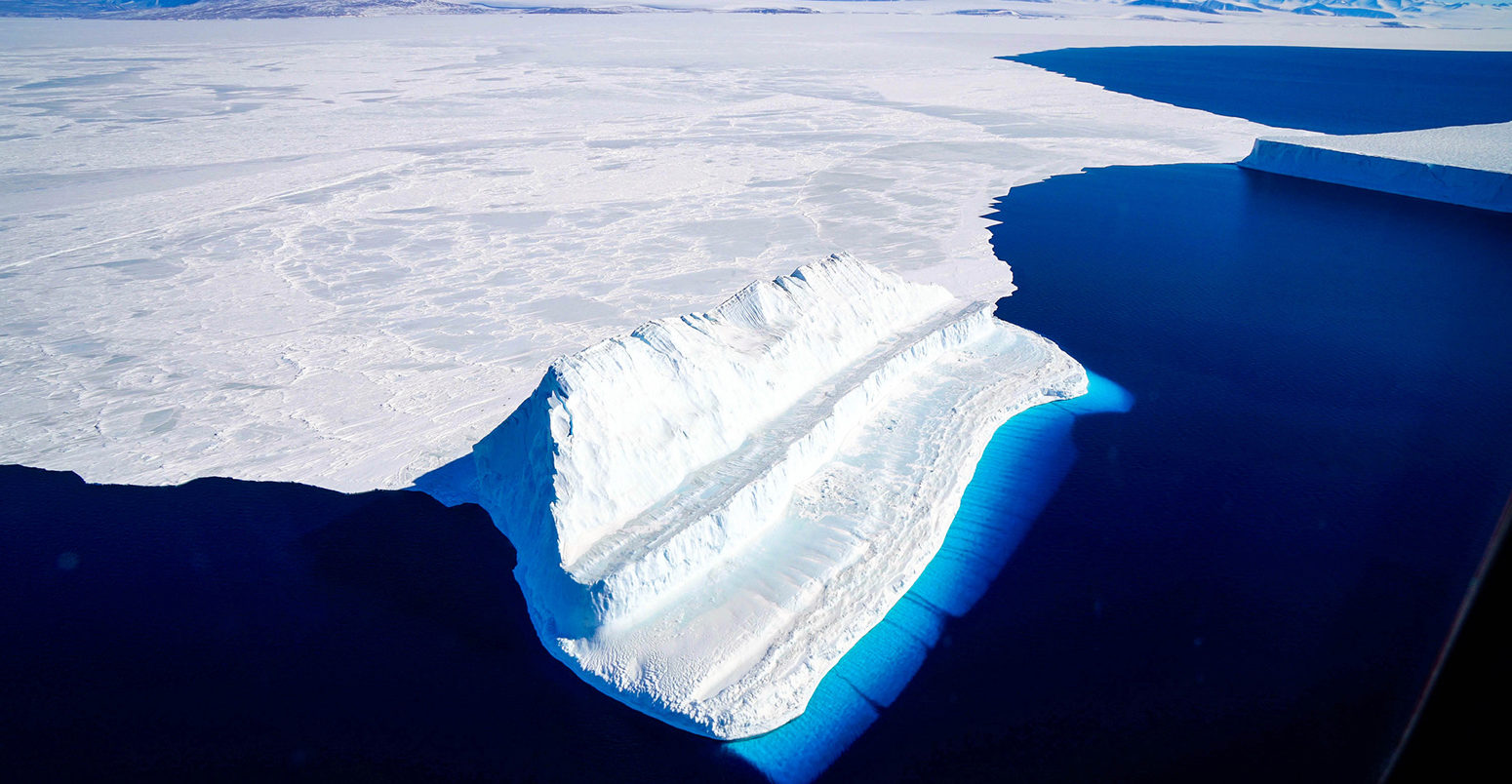
        Icecap melt.
         the ice there is getting thinner and melting smaller, and cracking, which is destroying the habit of all the animals and people that live there. Also, the increased amount of melted ice is causing the ocean levels to rise about 23 feet! 

        Climate change:
        The mass of the ice sheet has begun to decline
        Image result for definition of Ice cap melt.for kids
        Image result for definition of Ice cap melt.for kids